
What this covers
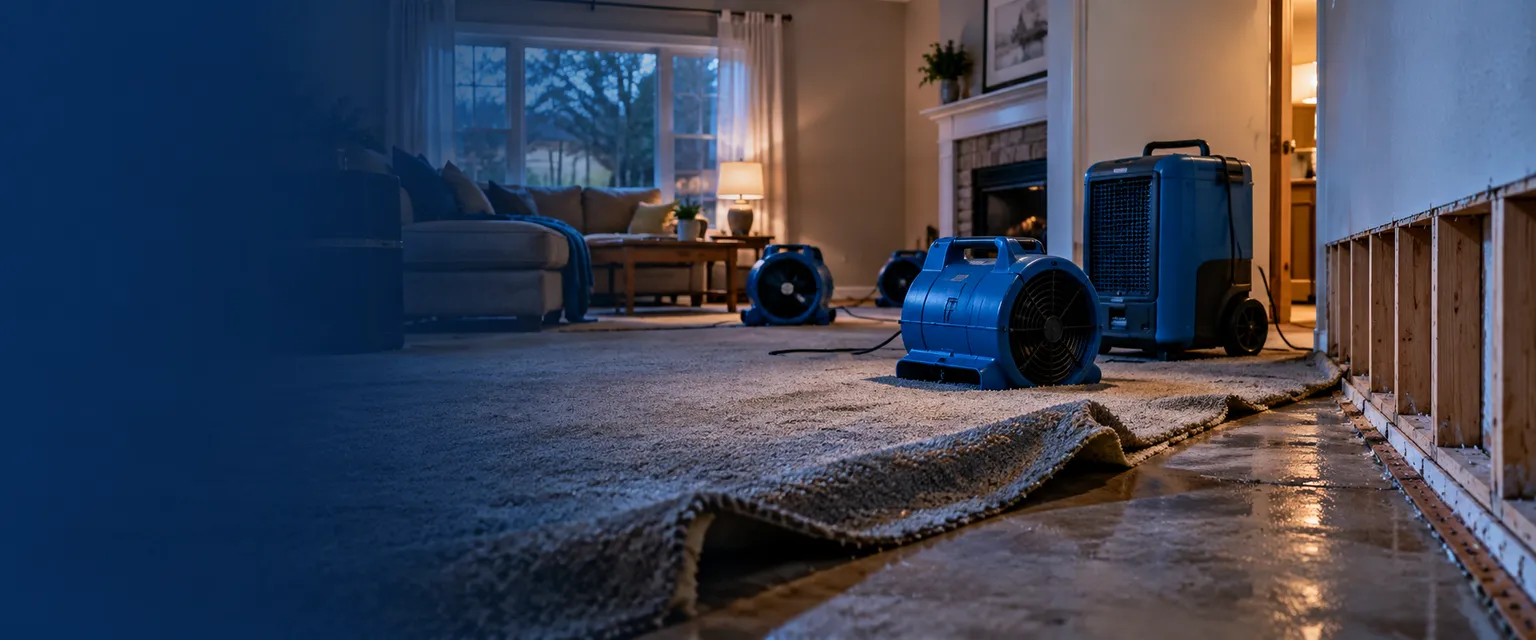
Water damage restoration starts where the water came from and ends when the structure reads dry on a meter. The company extracts standing water, pulls back or removes wet carpet and padding, opens walls where water got inside, sets air movers and dehumidifiers, and checks moisture levels daily until the readings return to normal. Materials that cannot be dried in place, such as soaked drywall and insulation, are cut out and bagged.
When to call
- Water on the floor from a leak, an appliance, a burst pipe or a backed-up drain.
- Carpet, baseboards or drywall that stay damp a day after the water stopped.
- A ceiling stain that is spreading, sagging or dripping.
- A musty smell in a room that was wet recently.
What to expect
- Source and safety firstThe company confirms the water is stopped and the area is safe to work in before any equipment goes down.
- Extraction and removalStanding water is pumped or vacuumed out. Wet padding, soaked drywall and other materials that will not dry are removed and documented.
- DryingAir movers and dehumidifiers run until moisture readings in the floor, walls and framing return to normal. Expect daily checks and photos.
- Ready for repairWhen the structure is dry the drying equipment comes out and the rebuild can be planned, by the same company or another certified contractor.
First, make it safe
Get a certified company
Tell us what happened and we will connect you with one certified restoration company for your ZIP code. Your details are shared only after you agree to that company by name.
Questions people ask
How long does drying take?
It depends on how much water there was, how long it sat, and what it soaked into. The company measures moisture every day and keeps the equipment running until the readings are back to normal, then tells you it is dry.
Do I have to move out?
Usually not for a single room. Drying equipment is loud and the affected room is closed off, but the rest of the home stays in use. Larger losses, or water that affected the kitchen or every bathroom, are a different conversation you have with the company.
Should I photograph everything first?
Yes. Photograph the water, the source and the damaged materials before anything is moved or removed. The company documents its own work too, and both sets of photos are useful later.
Related: Flood cleanup · Burst and frozen pipe cleanup · Mold remediation · All restoration and emergency services
This page describes what the service involves. The company you hire sets the scope, the schedule and the price, and your contract is with that company. We verify credentials and collect reviews from real jobs. We do not guarantee any company's workmanship. Safety steps are general guidance. When in doubt, leave the home and call 911.