
What this covers
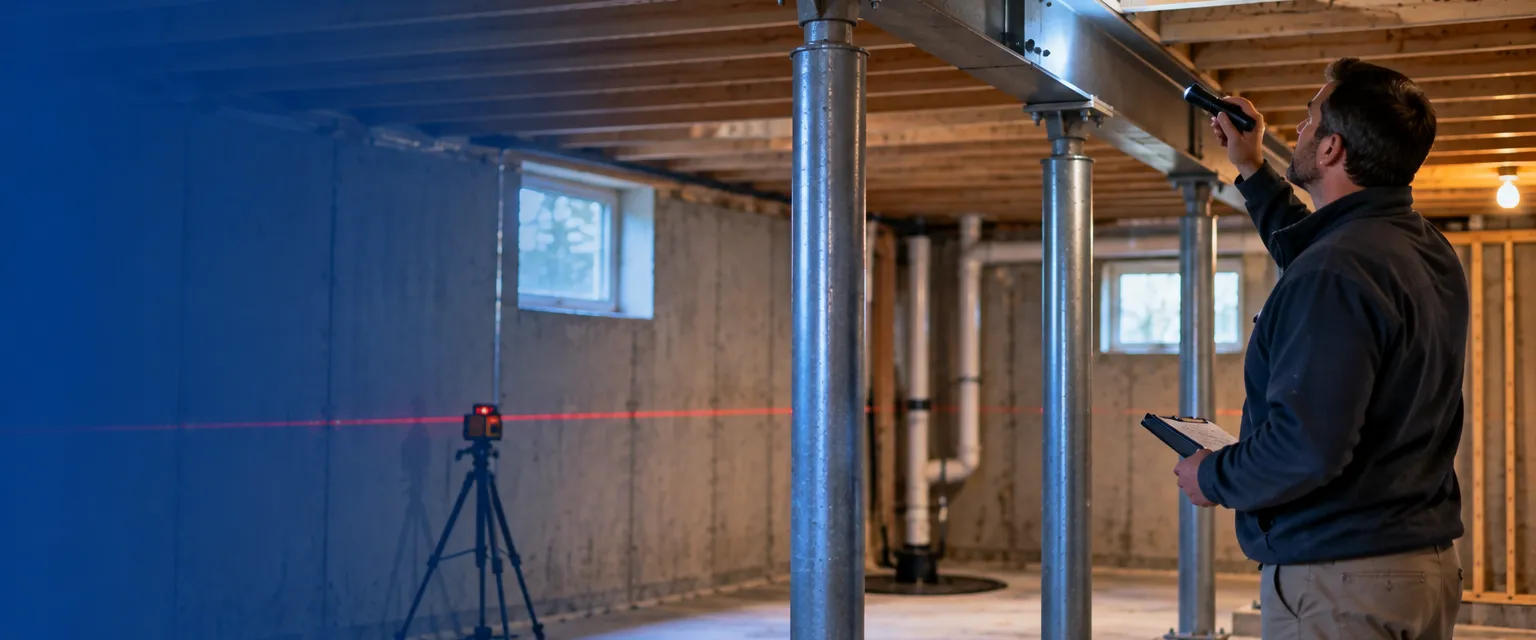
A structural engineering report is a licensed engineer's evaluation of part of a house: a cracked foundation, a sagging floor, an undersized beam, a wall to be removed, or framing after a fire or a tree strike. The engineer visits the site, looks at the framing and load path, measures floor levels and wall plumb with a laser or level, and records crack widths and patterns. The report explains what is happening and why, and where a repair is needed it sets out the design, often with stamped drawings for the permit. It is the document contractors build from.
When to call
- Foundation cracks that are widening, stepping or letting in water.
- Floors that slope, bounce or sag, or doors that stick as the house settles.
- A wall you want to remove or a beam that looks undersized.
- Framing or a foundation damaged by fire, a falling tree or flooding.
What to expect
- Site visitThe engineer inspects the area, the framing and the load path.
- MeasureFloor levels, wall plumb, cracks and member sizes are measured and recorded.
- ReportThe findings, the cause and any repair needed are written up.
- Repair designWhere a repair is needed, drawings are prepared for the permit and the contractor.
Get a certified company
Look up a certified company by ZIP code. Every company's license, insurance and trades are verified before it is listed, and placement is never paid.
Questions people ask
How is this different from a home inspection?
A home inspector notes visible concerns across the whole house. An engineer evaluates a specific structural question in depth and can design the repair.
Is a stamped report needed for a permit?
Often, for structural repairs and wall removals. Where the local code requires engineered drawings, the engineer provides them.
Does every crack need an engineer?
No. Thin, stable cracks are common as concrete cures. Wide, growing or stepped cracks, or cracks with other signs of movement, are worth an engineer's look.
Related: Foundation repair · Structural beam replacement · Home inspection · All inspections and testing
This page describes what the service involves. The company you hire sets the scope, the schedule and the price, and your contract is with that company. We verify credentials and collect reviews from real jobs. We do not guarantee any company's workmanship. Safety steps are general guidance. When in doubt, leave the home and call 911.