
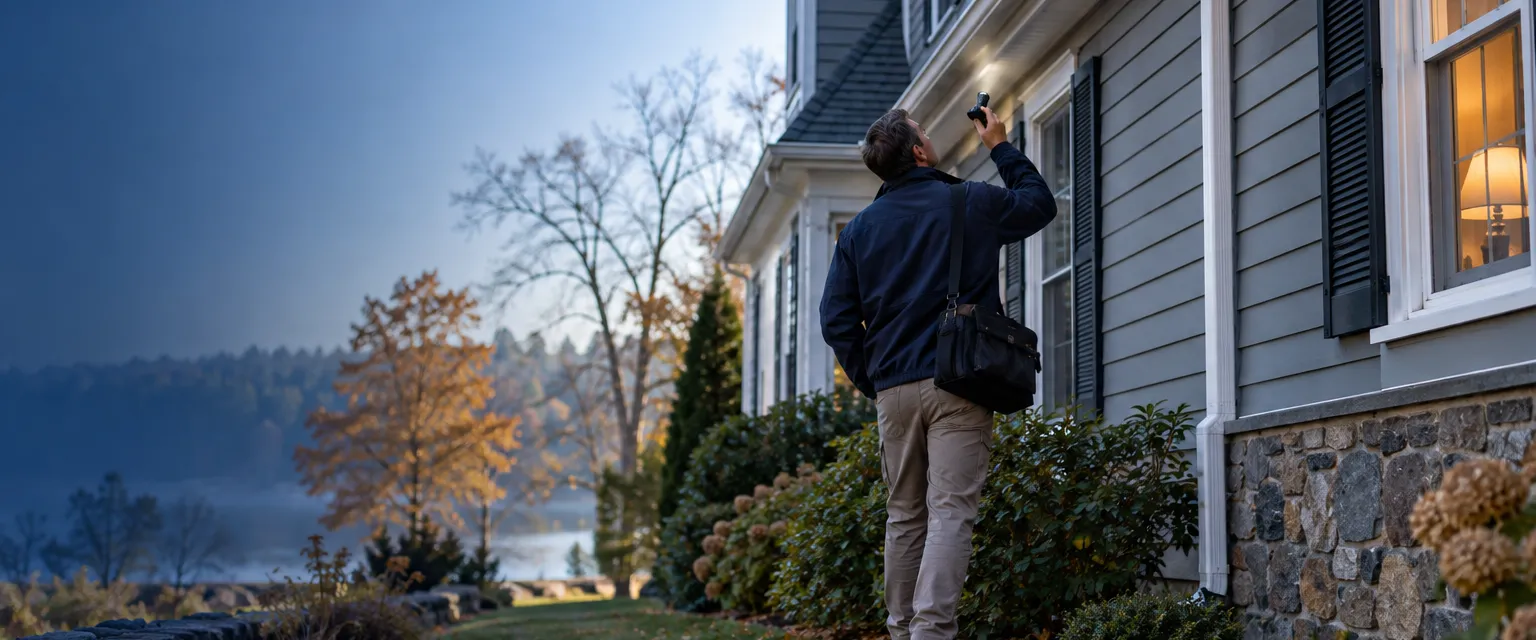
Inspections and testing
What each inspection and test involves, who carries it out, and what the report tells you before work begins.
Inspections and tests answer questions before anyone opens a wall: what condition the house is in, whether a material contains asbestos or lead, what the air in a basement holds, and whether a crack is cosmetic or structural. The pages below describe each service: what it is, how a qualified inspector or tester approaches it, and what the report shows.
After a loss, testing often comes first. Older materials are tested before demolition, mold is sampled before and after remediation, and an engineer looks at framing or a foundation before the rebuild is designed. A certified company brings the licensed inspectors and testers the work requires.
8 services
Home inspection
A visual survey of the whole house, written up with photos and plain findings.
Mold testing
Air and surface samples taken by a qualified tester and read by a lab.
Radon testing
A measured reading of radon in the lowest lived-in level of the home.
Radon mitigation
A vent pipe and fan that draw soil gas from under the slab and release it above the house.
Asbestos testing
Suspect materials sampled under dust control by a licensed inspector and analyzed by a lab.
Lead paint testing
Painted surfaces read with an analyzer, or sampled for a lab, by a qualified tester.
Sewer camera inspection
A camera run through the sewer line, recorded, with each problem located and marked.
Structural engineering reports
A licensed engineer's evaluation of framing or a foundation, with findings and a repair design.
Need a certified company?
Look up a certified company by ZIP code. Every company's license, insurance and trades are verified before it is listed.