
What this covers
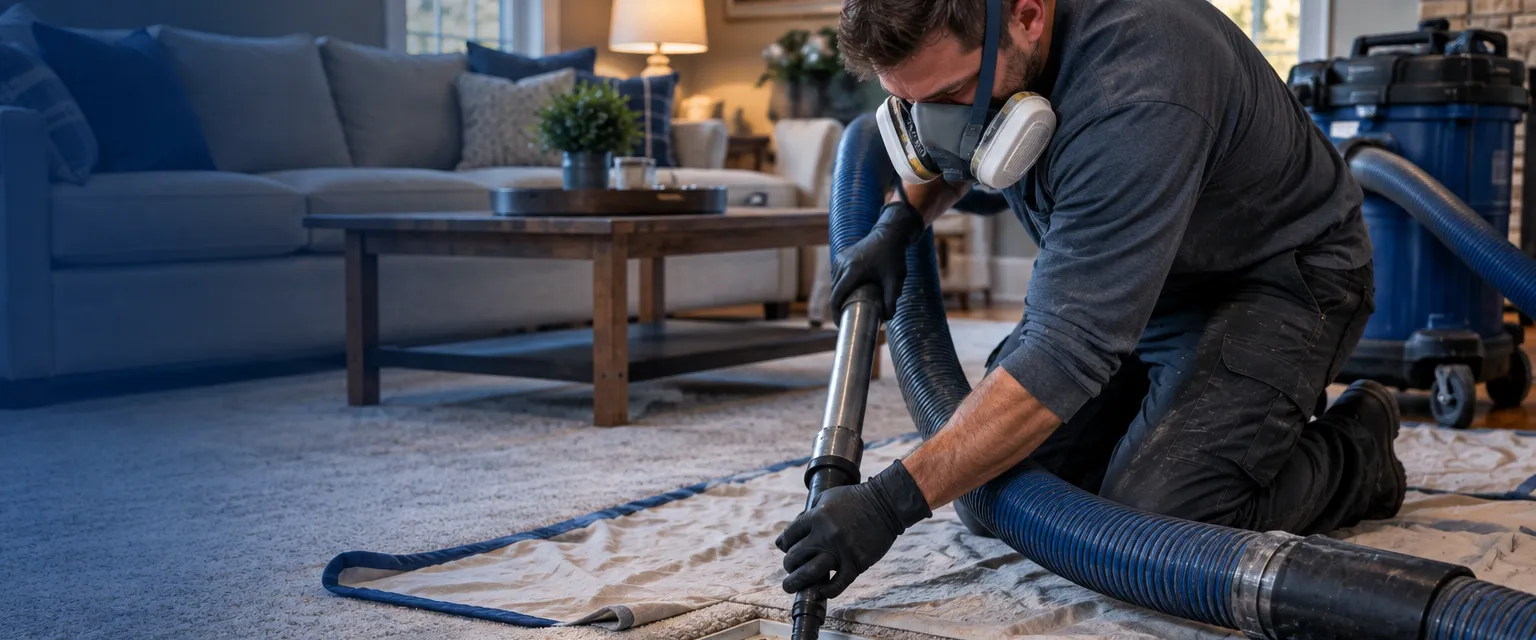
Air duct cleaning removes the dust, debris and contaminants that collect inside supply and return ducts. The technician seals a large vacuum to the return trunk to put the whole system under negative pressure, then works register by register with rotating brushes and compressed-air whips that knock debris loose so it travels to the vacuum rather than into the room. Registers, grilles and the blower compartment are cleaned, and the evaporator coil is cleaned where it is accessible. Every opening is sealed back when the job is done and a new filter installed. It is most useful after construction dust, a renovation, a rodent problem, or a fire or water loss that left soot or mold in the system.
When to call
- Dust puffing from registers when the system starts, or visible debris inside them.
- A remodel, a new build or a drywall project that left dust in the ducts.
- Evidence of rodents or insects in the ductwork.
- Soot after a fire or puffback, or mold found in a duct after a water loss.
What to expect
- InspectThe technician looks inside the ducts and the equipment to see what is there and how far it goes.
- Seal and vacuumRegisters are covered, floors protected, and the vacuum sealed to the system to pull air one way.
- AgitateEach run is brushed and whipped from the register toward the vacuum, then the trunks, blower and coil are cleaned.
- Close upAccess openings are sealed, registers reset, a new filter installed, and the system run and checked.
Get a certified company
Look up a certified company by ZIP code. Every company's license, insurance and trades are verified before it is listed, and placement is never paid.
Questions people ask
How often should ducts be cleaned?
There is no fixed schedule. Clean them when there is a reason: visible dust or debris, pests, or contamination from a loss or construction. A good filter changed on time keeps most systems clean for years.
Is a chemical treatment needed?
Usually not. Mechanical cleaning removes the material. When mold is confirmed, the affected ductwork is cleaned or replaced as part of remediation, and any treatment is limited to products made for use in HVAC systems.
Will the house be dustier afterward?
Not when the work is done under negative pressure with the openings sealed. The vacuum carries loosened debris out of the house, and the company checks the registers before leaving.
Related: Ductwork installation and repair · Furnace repair · Mold remediation · All heating, cooling and air quality
This page describes what the service involves. The company you hire sets the scope, the schedule and the price, and your contract is with that company. We verify credentials and collect reviews from real jobs. We do not guarantee any company's workmanship. Safety steps are general guidance. When in doubt, leave the home and call 911.