
What this covers
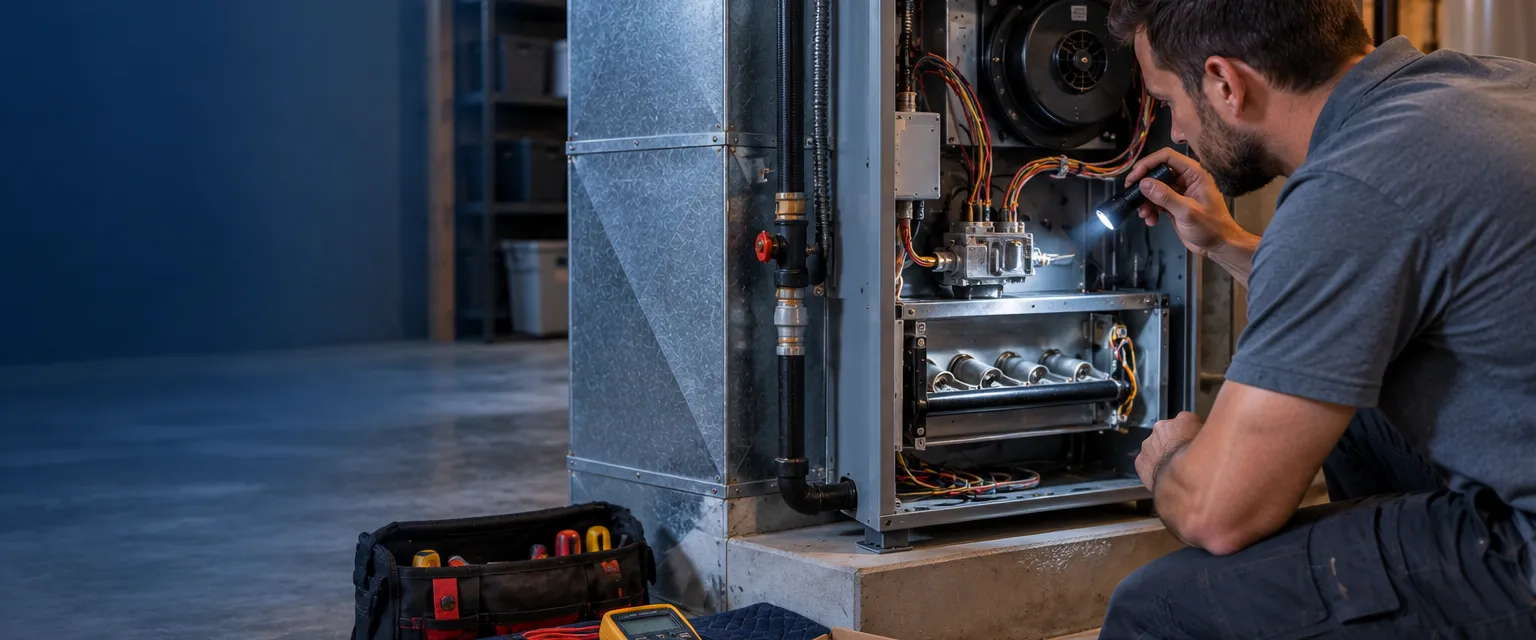
Furnace repair begins with the sequence of operation: does the thermostat call, does the inducer start, does the igniter glow, does the gas valve open, do the burners light and stay lit, does the blower run. The technician follows that sequence with a meter and the furnace's own diagnostic codes to the part that failed: an igniter, a flame sensor, a pressure switch, a limit switch, a control board or a blower motor. The heat exchanger is inspected on every call, because a crack changes the conversation from repair to replacement. The company isolates the gas and power before opening the unit, replaces the failed part with a matching one, and runs the furnace through several cycles before leaving.
When to call
- No heat, or a furnace that starts and shuts down before the house warms.
- A blower that runs but blows cool air.
- Soot around the furnace or on the registers after a puffback, or a burning smell when it runs.
- Short cycling, unusual noises, or a thermostat that reads far from the setpoint.
What to expect
- DiagnoseThe technician watches the start sequence and tests each stage with a meter to find where it stops.
- InspectThe heat exchanger, burners, venting and filter are checked, since the fault is often a symptom of them.
- RepairThe failed part is replaced with a matching one and the burners and flame sensor cleaned.
- TestThe furnace runs through several full cycles while temperature rise and safety controls are verified.
Get a certified company
Look up a certified company by ZIP code. Every company's license, insurance and trades are verified before it is listed, and placement is never paid.
Questions people ask
Why does the furnace light and then shut off?
Usually a dirty flame sensor that cannot confirm the flame, a pressure switch that does not prove the draft, or a limit switch tripping from low airflow. Each has a different fix, which is why the technician tests rather than guesses.
What is a cracked heat exchanger?
The heat exchanger separates combustion gases from the air that goes into the house. A crack lets them mix, so a furnace with a confirmed crack is taken out of service and replaced rather than repaired.
How often should a furnace be serviced?
Once a year before the heating season. A tune-up cleans the burners and flame sensor, checks the heat exchanger, gas pressure and safety controls, and catches worn parts before a cold night does.
Related: Furnace installation · Thermostat installation · Smoke damage cleanup · All heating, cooling and air quality
This page describes what the service involves. The company you hire sets the scope, the schedule and the price, and your contract is with that company. We verify credentials and collect reviews from real jobs. We do not guarantee any company's workmanship. Safety steps are general guidance. When in doubt, leave the home and call 911.