
What this covers
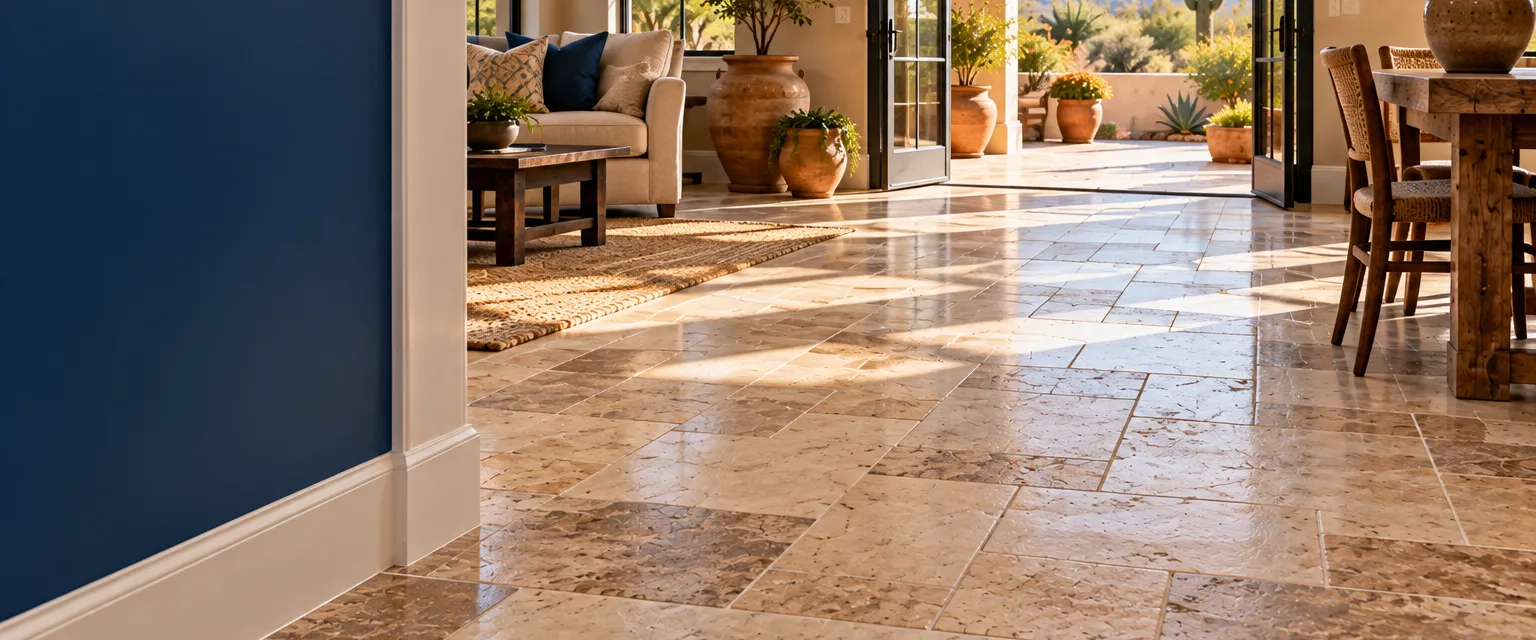
Travertine is a limestone formed around springs, with natural holes that are factory-filled or left open. It comes honed, polished or tumbled and is often laid in a Versailles pattern of mixed sizes. It is set over a rigid substrate in mortar, grouted, and sealed; unfilled holes are grouted during installation. Its warm tones suit sunrooms, kitchens, baths and patios.
When to call
- A sunroom, kitchen, bath, courtyard or patio in a warm palette.
- A Mediterranean or southwestern style home.
- An indoor-outdoor floor that continues onto a terrace.
What to expect
- ChooseFilled or unfilled, honed or tumbled, and the pattern.
- Substrate and layoutA rigid base is prepared and the pattern dry-laid.
- Set and groutStone is set in mortar, cured, and grouted, filling any open holes.
- SealSealed to resist stains, then trim and a walk-through.
Get a certified company
Look up a certified company by ZIP code. Every company's license, insurance and trades are verified before it is listed, and placement is never paid.
Questions people ask
What are the holes in travertine?
Natural voids left as the stone formed. Filled travertine has them packed at the factory; unfilled stone is grouted on site for a rustic look.
Is it slippery?
Honed and tumbled finishes are not. Polished travertine is kept to dry areas.
Can it go outside?
Yes, in climates where it will not freeze with water in its pores. In freezing regions it is used indoors or under cover.
Related: Natural stone flooring · Marble flooring · Porcelain tile flooring · All flooring
This page describes what the service involves. The company you hire sets the scope, the schedule and the price, and your contract is with that company. We verify credentials and collect reviews from real jobs. We do not guarantee any company's workmanship. Safety steps are general guidance. When in doubt, leave the home and call 911.