
What this covers
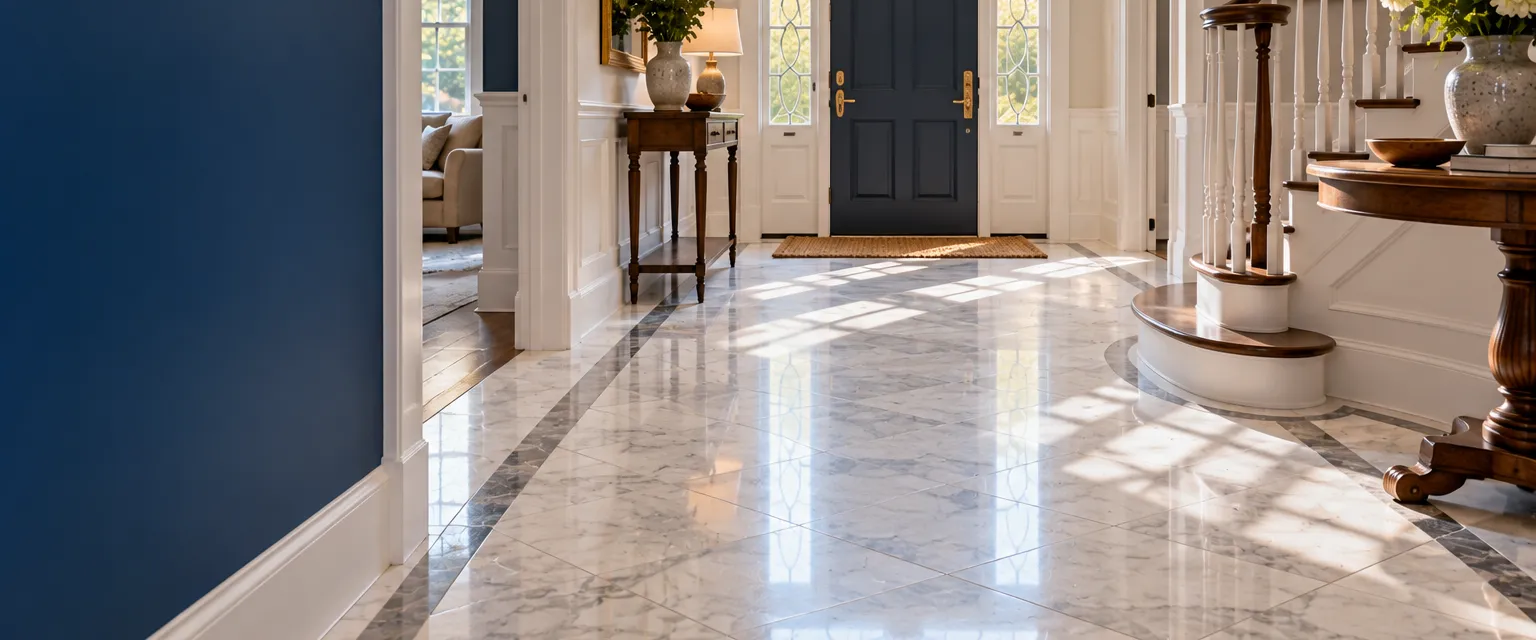
Marble is a soft, porous stone prized for its veining. It is set in white mortar so the stone does not discolor, over a rigid, flat substrate, with the tiles laid out first so veins and tones flow. Polished marble shows the most depth; honed marble hides etching and is less slippery. It needs sealing and gentle, pH-neutral cleaning, and acids such as vinegar or citrus etch it.
When to call
- A foyer, formal bath or fireplace surround where the look justifies the care.
- A traditional home with other stone or classical details.
- A remodel where a polished finish is wanted.
What to expect
- SubstrateA rigid, flat base is prepared; marble cracks over any flex.
- Lay outTiles are dry-laid and arranged for vein direction and tone.
- Set and groutWhite thinset, spacers for thin joints, cure, then grout.
- Finish and sealPolished or honed, then sealed, with trim and a walk-through.
Get a certified company
Look up a certified company by ZIP code. Every company's license, insurance and trades are verified before it is listed, and placement is never paid.
Questions people ask
Is marble practical for a kitchen floor?
It can be, with a honed finish and regular sealing, but it etches and stains more easily than porcelain or granite. Many people choose it for foyers and baths instead.
What is etching?
A dull spot left where an acid dissolved the polished surface. Honed marble hides it; polished marble shows it and can be re-polished.
How do I clean it?
A pH-neutral stone cleaner and water. No vinegar, bleach or abrasive pads.
Related: Natural stone flooring · Travertine flooring · Porcelain tile flooring · All flooring
This page describes what the service involves. The company you hire sets the scope, the schedule and the price, and your contract is with that company. We verify credentials and collect reviews from real jobs. We do not guarantee any company's workmanship. Safety steps are general guidance. When in doubt, leave the home and call 911.