
What this covers
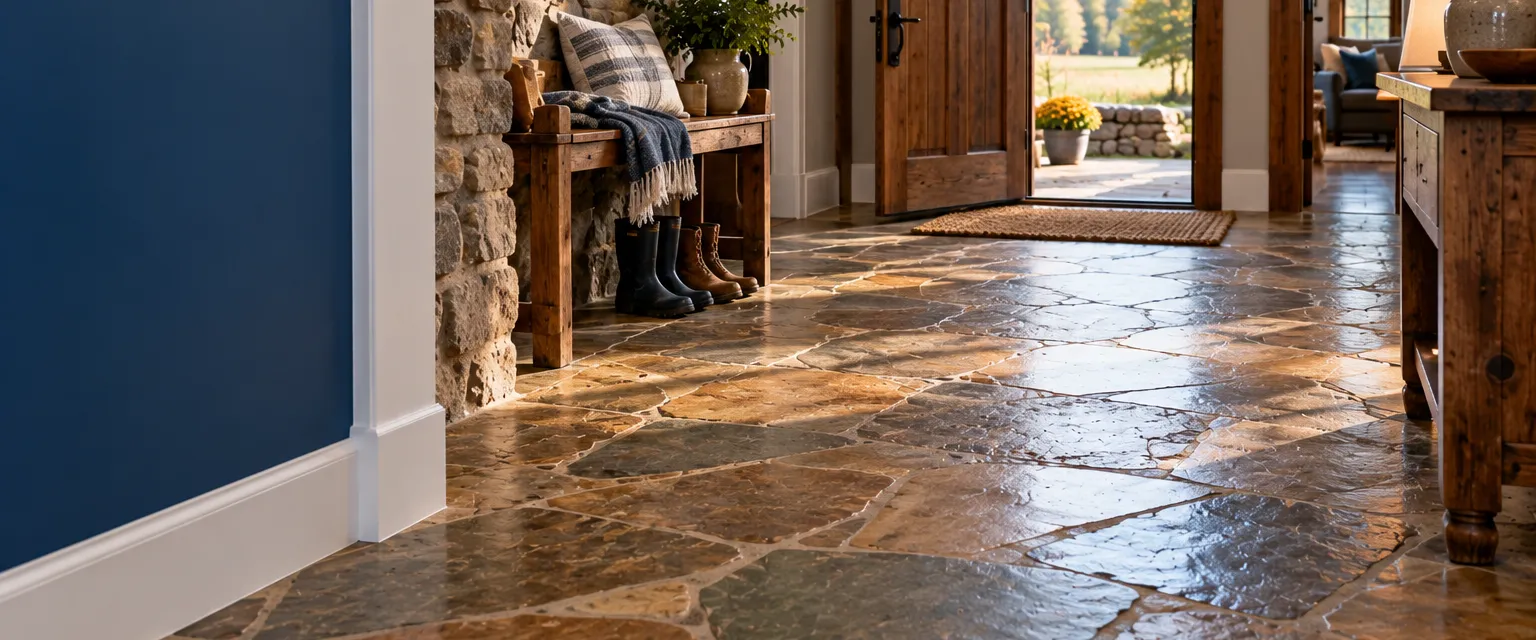
Natural stone floors are cut or split from quarried rock: flagstone, limestone, granite, sandstone and others. Each piece varies, so the installer sorts and lays out the stone before setting it in mortar over a rigid substrate. Irregular flagstone is fitted like a puzzle; cut tiles are set like porcelain. Stone is porous to varying degrees and is sealed after grouting.
When to call
- An entry, hall, kitchen or sunroom where a natural, varied surface is wanted.
- A rustic or traditional home.
- An indoor-outdoor connection to a stone patio.
What to expect
- SubstrateThe floor is checked for stiffness and flatness and a cement board or mortar bed prepared.
- Sort and lay outStone is sorted for color and thickness and dry-laid to plan the fit.
- Set and groutPieces are set in mortar, cured, and grouted.
- SealThe stone and grout are sealed, then trim and a walk-through.
Get a certified company
Look up a certified company by ZIP code. Every company's license, insurance and trades are verified before it is listed, and placement is never paid.
Questions people ask
Which stone is hardest?
Granite and quartzite are hardest; limestone, sandstone and slate are softer and more porous. The company matches the stone to the room's use.
How often is sealing needed?
It depends on the stone and traffic. When water stops beading on it, it is time to reseal.
Is stone slippery?
Honed or textured finishes are not. Polished stone can be when wet and is avoided in entries and baths.
Related: Slate flooring · Travertine flooring · Marble flooring · All flooring
This page describes what the service involves. The company you hire sets the scope, the schedule and the price, and your contract is with that company. We verify credentials and collect reviews from real jobs. We do not guarantee any company's workmanship. Safety steps are general guidance. When in doubt, leave the home and call 911.