
What this covers
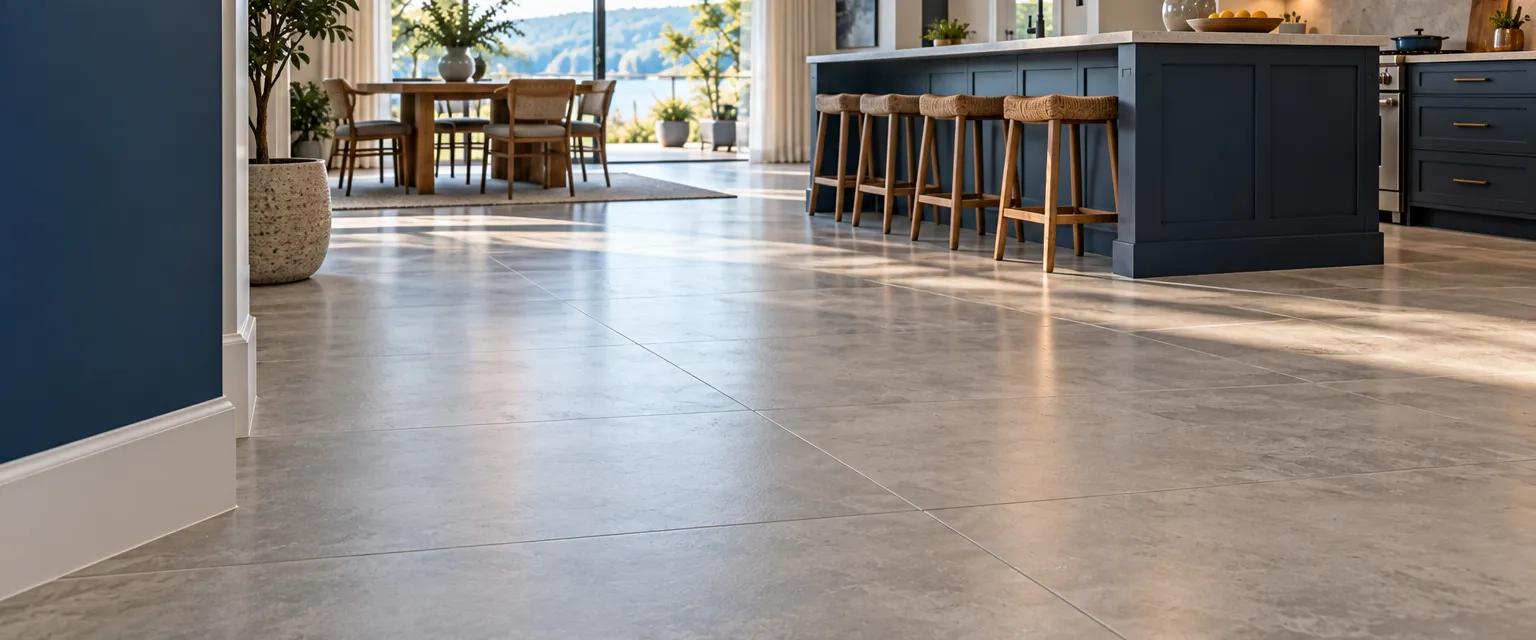
Porcelain is fired denser and harder than ceramic, which makes it more scratch and stain resistant and suitable for entries, kitchens and even outdoors. Large-format tiles and slabs need an especially flat substrate, a leveling system to keep edges even, and a mortar and trowel sized for the tile. The result is a floor with thin joints that reads almost like one surface.
When to call
- Kitchens, entries, mudrooms and open living areas with heavy traffic.
- A modern look with large tiles and thin grout lines.
- Indoor-outdoor transitions where the same tile runs through.
What to expect
- Flatten the substrateThe floor is leveled to the tight tolerance large tile needs, and cement board or a membrane installed.
- LayoutLines are set so large tiles land well at walls and doorways.
- SetTiles are back-buttered and set with a leveling system, then cured.
- Grout and sealThin joints are grouted and sealed, then trim and a walk-through.
Get a certified company
Look up a certified company by ZIP code. Every company's license, insurance and trades are verified before it is listed, and placement is never paid.
Questions people ask
What counts as large format?
Tiles with any edge longer than about 15 inches. They are less forgiving of an uneven floor and need the leveling step.
Is porcelain cold?
Tile is as warm as the room, but it conducts heat away from feet. Electric floor heating under the tile solves that in bathrooms.
Does it chip?
Through-body porcelain shows the same color if chipped. Glazed porcelain may show a different core. Both are hard to chip in normal use.
Related: Ceramic tile flooring · Natural stone flooring · Floor leveling · All flooring
This page describes what the service involves. The company you hire sets the scope, the schedule and the price, and your contract is with that company. We verify credentials and collect reviews from real jobs. We do not guarantee any company's workmanship. Safety steps are general guidance. When in doubt, leave the home and call 911.