
What this covers
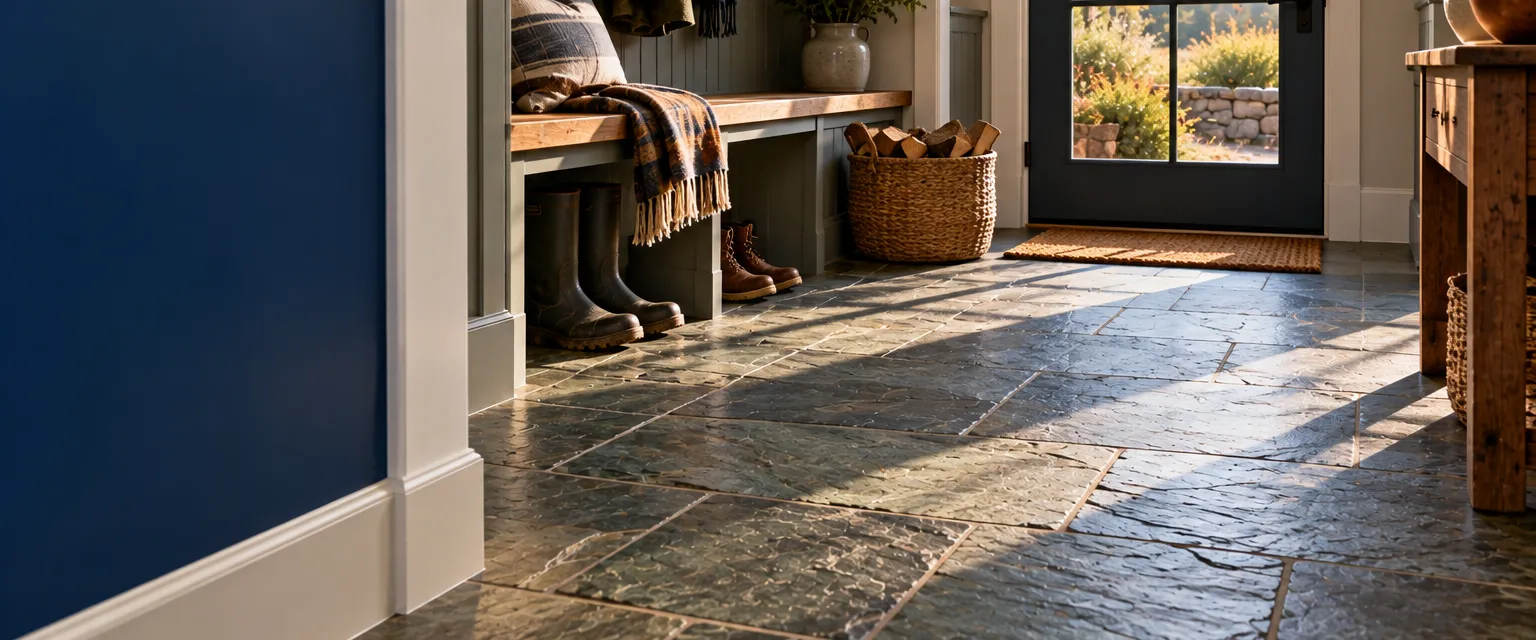
Slate splits into sheets along natural layers, which gives it a textured cleft surface and some variation in thickness. The installer sorts tiles, uses a medium-bed mortar to take up the differences, sets them over a rigid substrate, grouts, and seals. The texture hides dirt and gives grip, which is why slate is a favorite for entries, mudrooms and kitchens.
When to call
- An entry, mudroom, kitchen or hall that gets wet boots and tracked-in grit.
- A wish for a natural, dark, textured floor.
- A farmhouse, craftsman or rustic style home.
What to expect
- SortTiles are sorted for thickness and color and the layout planned.
- SubstrateA rigid base is prepared for the stone's weight.
- Set and groutMedium-bed mortar evens the thickness; tiles are set, cured and grouted.
- SealA sealer protects the stone and grout, then trim and a walk-through.
Get a certified company
Look up a certified company by ZIP code. Every company's license, insurance and trades are verified before it is listed, and placement is never paid.
Questions people ask
Does slate flake?
Some slates shed thin layers at first, which is normal and stops after the loose material is cleaned off and the floor sealed. Denser slates flake less.
Is the surface uneven?
Cleft slate has a gentle texture. Gauged or honed slate is flatter if you prefer it.
Does it need sealing?
Yes, to resist stains and make cleaning easier. Enhancing sealers deepen the color; natural sealers leave it as is.
Related: Natural stone flooring · Porcelain tile flooring · Mudroom remodeling · All flooring
This page describes what the service involves. The company you hire sets the scope, the schedule and the price, and your contract is with that company. We verify credentials and collect reviews from real jobs. We do not guarantee any company's workmanship. Safety steps are general guidance. When in doubt, leave the home and call 911.