
What this covers
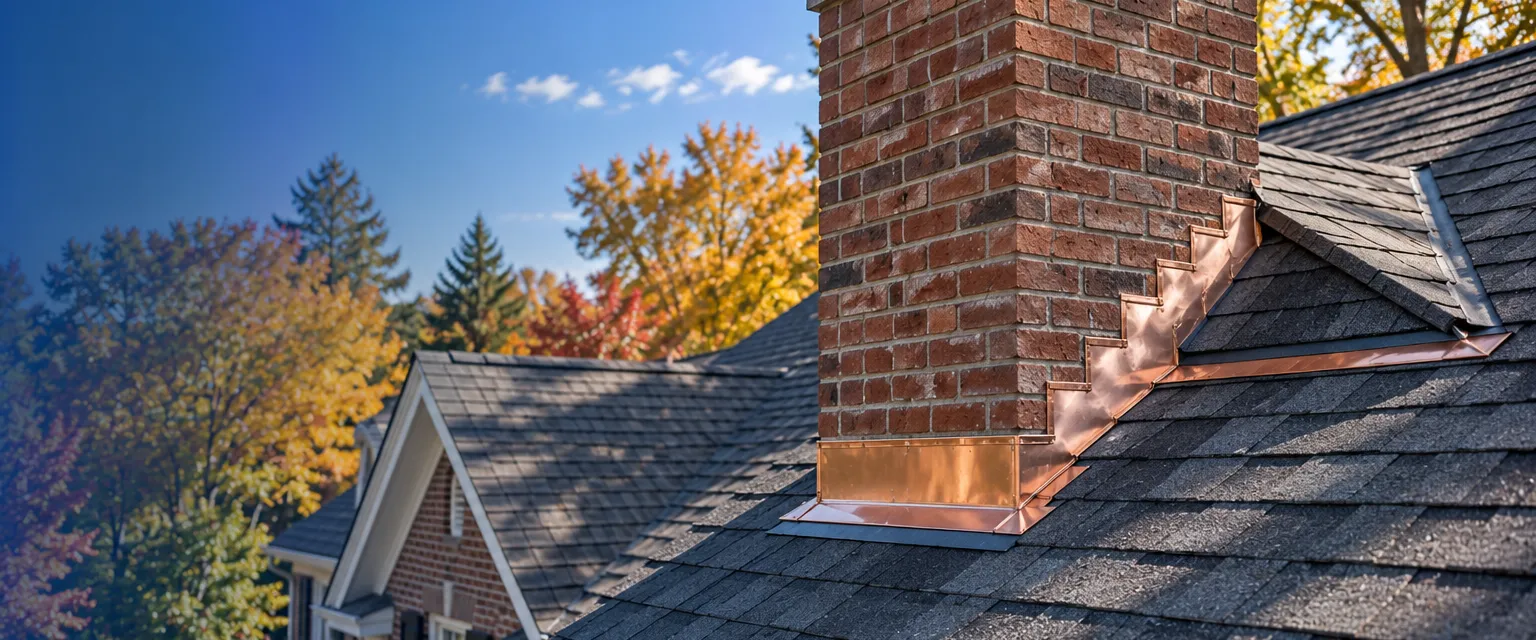
A chimney is the most common leak point on a roof because the masonry and the roof move independently. Proper flashing has two layers: step flashing woven into each shingle course and turned up the chimney, and counter flashing let into the mortar joints and bent down over the step flashing, so water cannot get behind either. On the upslope side, a cricket, a small peaked saddle, diverts water around the chimney instead of letting it pool. The roofer removes failed flashing, grinds the mortar joints, fits and solders or seals new metal, rebuilds the cricket and relays the shingles. Careful work shows in metal that does the sealing, with caulk only as a backup, and in masonry that is checked at the same time.
When to call
- A stain on the ceiling or wall near the chimney after rain.
- Flashing that is rusted, lifted or sealed with layers of old caulk or roof cement.
- Water standing behind the chimney where a cricket should be.
- A chimney that is leaking even though the roof around it is new.
What to expect
- InspectThe roofer checks the flashing, cricket, mortar joints, crown and the attic framing around the chimney.
- RemoveOld flashing and the shingles around the chimney are removed and the joints cleaned.
- FlashNew step and counter flashing are fitted, with a cricket rebuilt where needed.
- Relay and checkShingles are relaid, the joints sealed and the work hose-tested.
Get a certified company
Look up a certified company by ZIP code. Every company's license, insurance and trades are verified before it is listed, and placement is never paid.
Questions people ask
Can flashing just be caulked?
Caulk is a short-term patch, not a flashing method. It fails as the chimney and roof move, and the leak comes back.
What is a cricket and do I need one?
A small peaked diverter built behind a chimney on the upslope side. Most codes require one on wider chimneys, and it is good practice on any chimney that collects water behind it.
Is the leak the flashing or the chimney itself?
Either, or both. A cracked crown, missing cap or porous brick lets water in from above. The company checks the masonry as part of the flashing work and recommends a mason where needed.
Related: Roof repair · Chimney repair · Roof inspection · All roofing and gutters
This page describes what the service involves. The company you hire sets the scope, the schedule and the price, and your contract is with that company. We verify credentials and collect reviews from real jobs. We do not guarantee any company's workmanship. Safety steps are general guidance. When in doubt, leave the home and call 911.