
What this covers
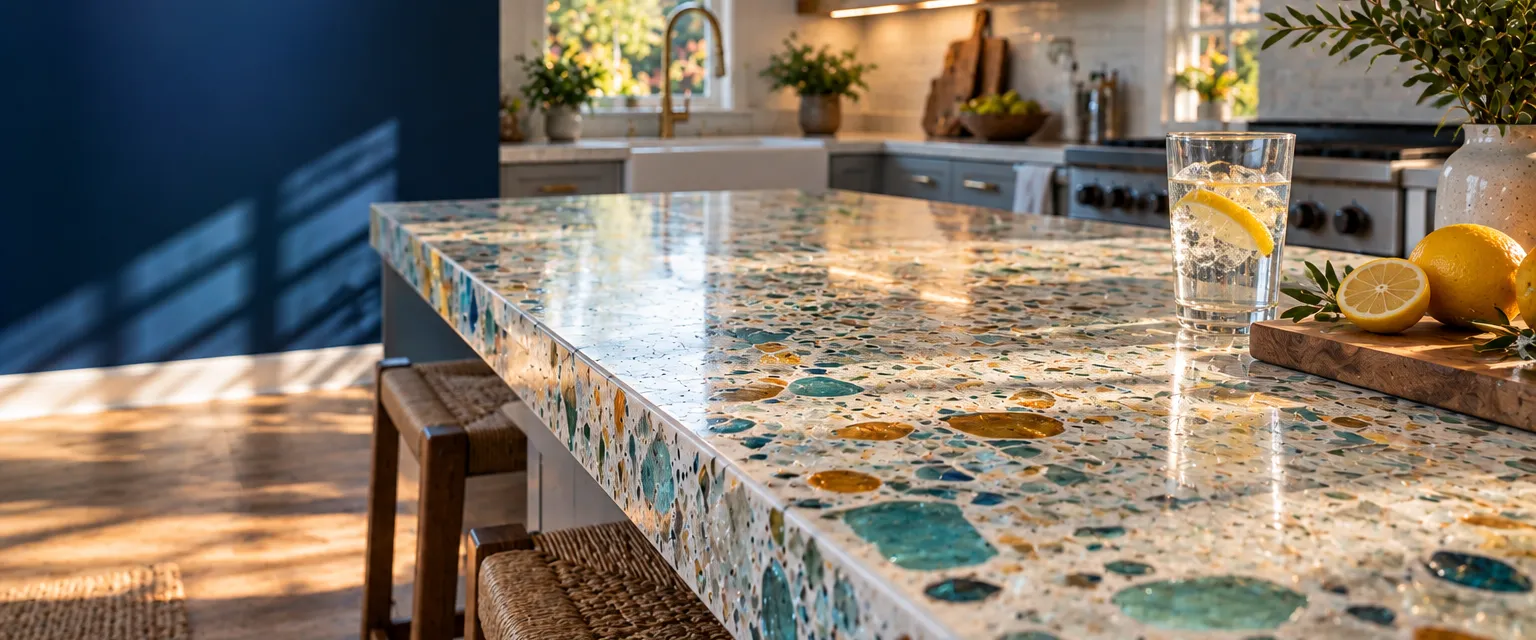
Recycled glass countertops set chips of post-consumer glass in either a cement binder, which is porous and needs sealing, or a resin binder, which is non-porous like quartz. The slabs are fabricated and installed like stone. The look ranges from subtle speckle to bold color, and the material is a way to use a sustainable product without giving up a hard, cleanable surface.
When to call
- A wish for color and a sustainable material.
- A bar, island or bath vanity that can be a feature.
- A kitchen where a light, bright surface is wanted.
What to expect
- ChooseBinder type, glass color mix and finish from samples.
- Template and fabricateTemplating after cabinets are set; cutting, edging and polishing in the shop.
- InstallSet, seamed, sink mounted.
- SealCement-based slabs are sealed; resin-based need none.
Get a certified company
Look up a certified company by ZIP code. Every company's license, insurance and trades are verified before it is listed, and placement is never paid.
Questions people ask
Does it chip?
Edges can, like any hard surface. Eased or rounded edges help.
Cement or resin binder?
Cement gives a matte, terrazzo-like look and needs sealing; resin is glossier and non-porous. The company shows both.
Is it heat resistant?
Cement-based slabs tolerate heat well; resin-based should get trivets like quartz.
Related: Quartz countertops · Concrete countertops · Tile countertops · All cabinets and countertops
This page describes what the service involves. The company you hire sets the scope, the schedule and the price, and your contract is with that company. We verify credentials and collect reviews from real jobs. We do not guarantee any company's workmanship. Safety steps are general guidance. When in doubt, leave the home and call 911.