
What this covers
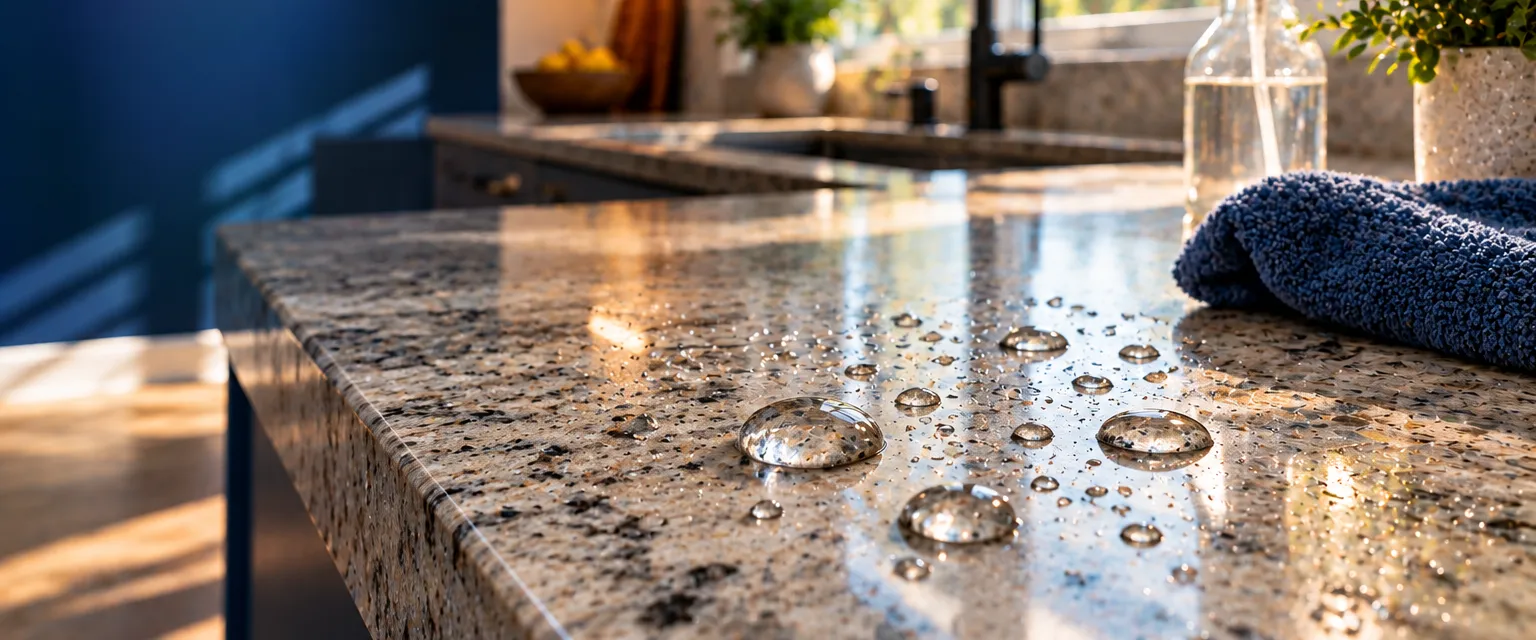
Natural stone and concrete counters are porous and absorb stains unless sealed. Sealing tests the surface with a water drop, cleans it thoroughly, applies a penetrating sealer that soaks into the pores without changing the look, wipes off the excess before it dries, and lets it cure. Quartz, porcelain and sintered stone do not need it. The job is repeated when water stops beading.
When to call
- Water soaks into the counter instead of beading.
- A dark ring left by a glass or a bottle.
- A new stone or concrete counter at installation.
What to expect
- TestA water drop shows whether the sealer has worn.
- CleanThe surface is cleaned and dried completely.
- SealSealer is applied, allowed to penetrate, and the excess wiped off.
- CureThe counter rests until the sealer has cured, then is back in use.
Get a certified company
Look up a certified company by ZIP code. Every company's license, insurance and trades are verified before it is listed, and placement is never paid.
Questions people ask
How often?
It depends on the stone and use. Some granites go years; marble and concrete more often. The water test tells you.
Does sealing stop etching?
No. Sealers keep stains out of the pores. Etching is acid dissolving the surface and sealers do not prevent it.
Can I do it myself?
Many owners do. A company does it as part of installation and when it is combined with a deep clean or a repair.
Related: Granite countertops · Marble countertops · Concrete countertops · All cabinets and countertops
This page describes what the service involves. The company you hire sets the scope, the schedule and the price, and your contract is with that company. We verify credentials and collect reviews from real jobs. We do not guarantee any company's workmanship. Safety steps are general guidance. When in doubt, leave the home and call 911.