
What this covers
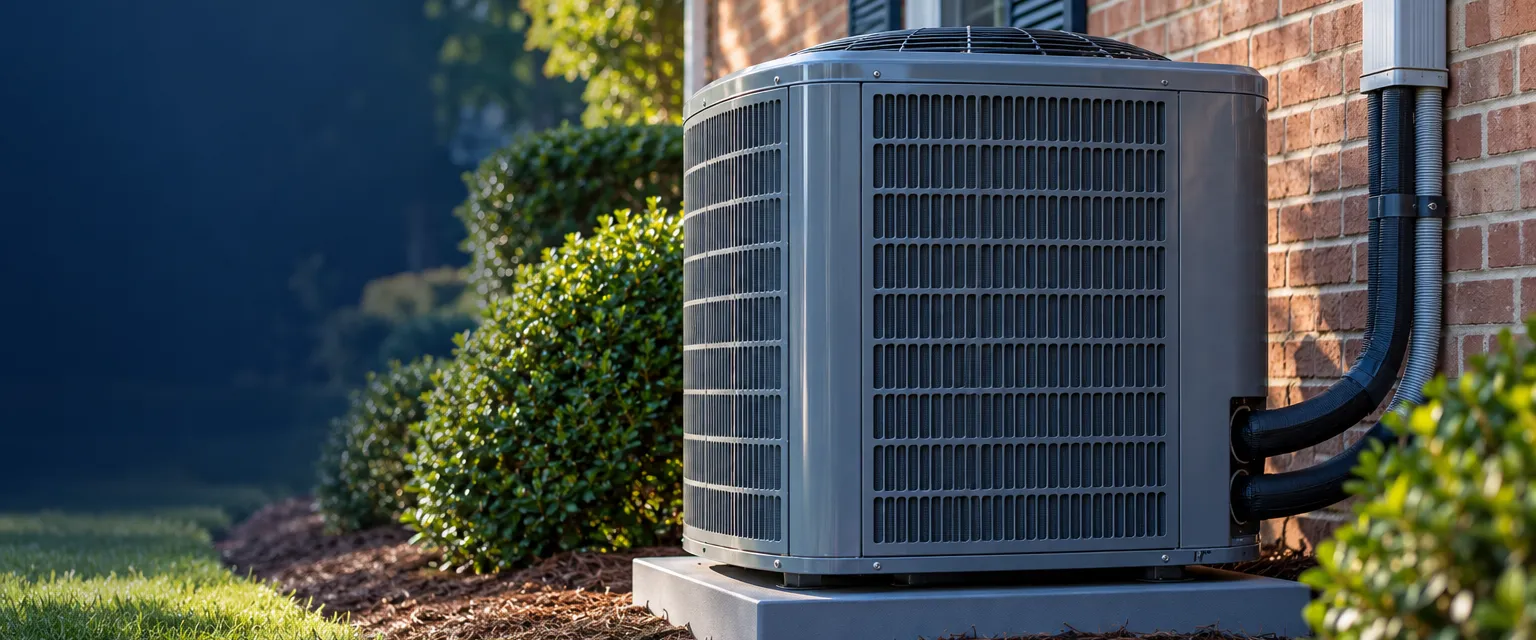
Central air conditioning is two matched parts: an outdoor condenser and an indoor evaporator coil on the furnace or air handler, joined by a refrigerant line set. The installer starts with a load calculation of the house, because an oversized system cools fast but leaves the air damp, and an undersized one never catches up. The old refrigerant is recovered and the old equipment removed, a level pad set, the new condenser and coil installed, and the line set run, brazed and pressure tested. The system is evacuated to a deep vacuum and charged to the manufacturer's specification. Electrical and condensate connections are finished, and airflow and temperature split are measured before the company leaves.
When to call
- A system past fifteen years that needs refrigerant every season or a repair every summer.
- Rooms that never cool evenly, or a unit that runs all afternoon without reaching the setpoint.
- A home that has never had central air, or an addition the current system cannot carry.
- Equipment damaged by flooding, a storm or a fire that is being rebuilt.
What to expect
- SizeThe company measures the house, insulation, windows and ductwork and sizes the system from the result.
- Remove and setThe old refrigerant is recovered, the old equipment removed, and the pad, condenser and coil set.
- ConnectThe line set is run and brazed, the system pressure tested and evacuated, and electrical and drain connections made.
- Charge and testRefrigerant is weighed in, airflow and temperatures checked, and the thermostat set up with you.
Get a certified company
Look up a certified company by ZIP code. Every company's license, insurance and trades are verified before it is listed, and placement is never paid.
Questions people ask
How is the right size chosen?
By a room-by-room load calculation, not by the size of the old unit. Square footage alone misses insulation, windows, orientation and duct losses, and all of them change the answer.
Do the ducts need changing too?
Often not, but the installer checks them. Undersized or leaking ducts hold back a new system, and a higher-efficiency coil may need more airflow than the old one did.
Is a permit needed?
Where the local code requires one, the company pulls it and arranges the inspection. Refrigerant is recovered and handled by a technician holding the required certification.
Related: Air conditioner repair · Ductwork installation and repair · Electrical panel upgrades · All heating, cooling and air quality
This page describes what the service involves. The company you hire sets the scope, the schedule and the price, and your contract is with that company. We verify credentials and collect reviews from real jobs. We do not guarantee any company's workmanship. Safety steps are general guidance. When in doubt, leave the home and call 911.