
What this covers
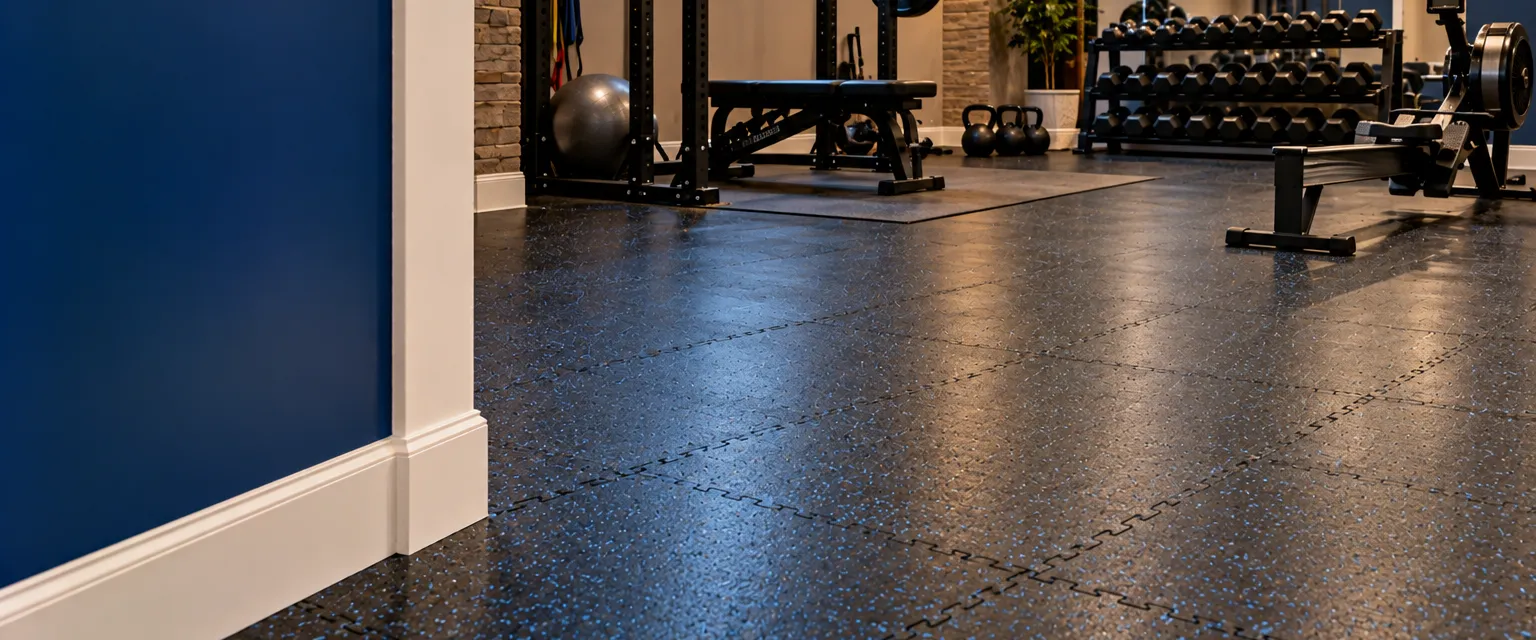
Rubber flooring comes as interlocking tiles, rolls or thick mats in recycled or virgin rubber. It absorbs the impact of dropped weights, cushions falls, dampens noise to rooms below and tolerates moisture. Tiles and mats lay loose or glue down over a flat subfloor; rolls are glued for a seamless look. It suits home gyms, playrooms, basements and laundry areas.
When to call
- A home gym with free weights or machines.
- A playroom or basement where noise and falls matter.
- A utility area that needs a durable, washable, non-slip floor.
What to expect
- ChooseTiles, rolls or mats; thickness based on how it will be used.
- PrepareThe subfloor is cleaned and checked for flatness.
- InstallLoose-lay or glued, with seams tight and edges trimmed.
- FinishEdge ramps or trim, then a walk-through.
Get a certified company
Look up a certified company by ZIP code. Every company's license, insurance and trades are verified before it is listed, and placement is never paid.
Questions people ask
Does it smell?
New rubber has an odor that fades over a few weeks with ventilation. Low-odor products exist.
How thick should a gym floor be?
Thicker for free weights, thinner for cardio and machines. The company recommends based on what you lift.
Can it go over carpet?
No. Rubber needs a hard, flat base. Carpet is removed first.
Related: Epoxy flooring · Luxury vinyl plank (LVP) flooring · Basement finishing · All flooring
This page describes what the service involves. The company you hire sets the scope, the schedule and the price, and your contract is with that company. We verify credentials and collect reviews from real jobs. We do not guarantee any company's workmanship. Safety steps are general guidance. When in doubt, leave the home and call 911.