
What this covers
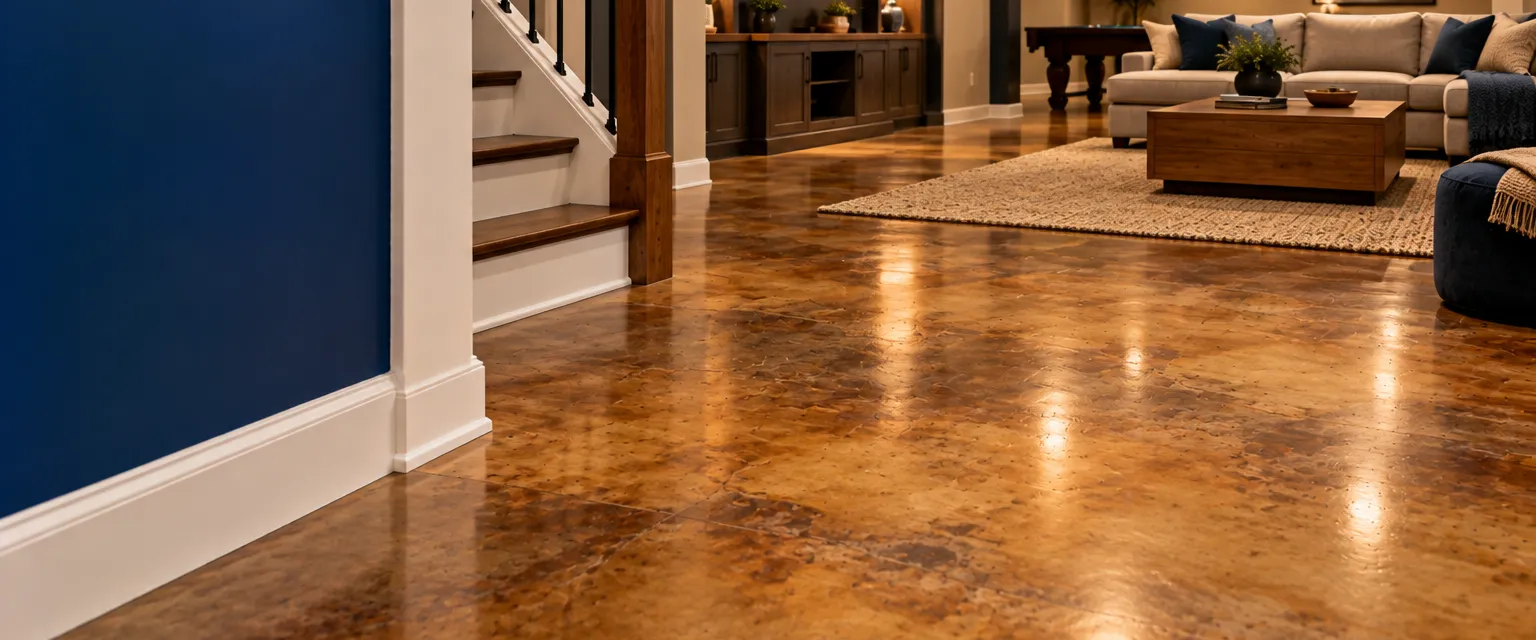
Stained concrete adds color to a slab without covering it. Acid stains react with the minerals in the concrete for a variegated, mottled look in earth tones; water-based stains soak in for a wider, more even palette. The slab is cleaned and profiled, the stain applied and allowed to react, residue neutralized and rinsed, and the floor sealed with a protective coat. It suits basements, sunrooms and slab homes.
When to call
- A basement, sunroom or slab-on-grade room where the concrete can stay exposed.
- A warm, varied look rather than a coating.
- A floor that was flooded, dried and cleaned and will stay concrete.
What to expect
- PrepareThe slab is cleaned, old coatings removed, and the surface opened so stain can penetrate.
- StainAcid or water-based stain is applied, often in layers for depth.
- Neutralize and rinseAcid stains are neutralized and the residue rinsed away.
- SealA sealer and, indoors, a wax or finish coat, then a walk-through.
Get a certified company
Look up a certified company by ZIP code. Every company's license, insurance and trades are verified before it is listed, and placement is never paid.
Questions people ask
Will the color be even?
Acid stain is deliberately variegated and reacts differently across a slab; no two floors look alike. Water-based stain is more uniform.
Can an old slab be stained?
Yes, if coatings and sealers are removed first. Patches and repairs take stain differently and show.
How does it wear?
The color is in the concrete, so it does not peel. The sealer takes the wear and is reapplied every few years.
Related: Concrete floor polishing · Epoxy flooring · Basement finishing · All flooring
This page describes what the service involves. The company you hire sets the scope, the schedule and the price, and your contract is with that company. We verify credentials and collect reviews from real jobs. We do not guarantee any company's workmanship. Safety steps are general guidance. When in doubt, leave the home and call 911.