
What this covers
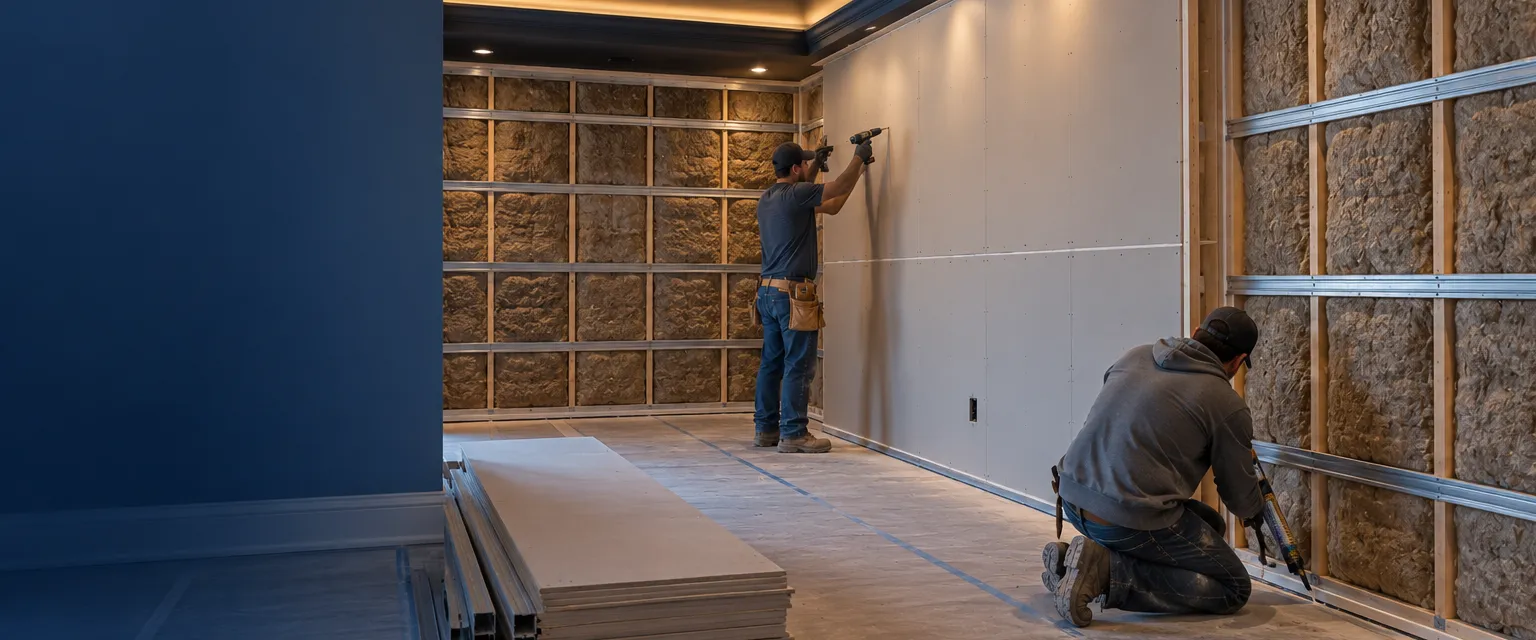
Soundproofing reduces how much sound passes through a wall, floor or ceiling. It works on four principles: mass, decoupling, absorption and sealing. The company adds dense insulation in the cavity, mounts drywall on resilient channel or isolation clips so it is not fastened straight to the studs, hangs a second layer of board with a damping compound between the layers, and seals every edge, box and gap with acoustic sealant. Doors, outlets and ductwork are addressed because sound finds the weakest path. The result is quieter bedrooms, a home office that stays private, or a theater room the rest of the house does not hear.
When to call
- A bedroom, nursery or office next to a noisy room or a shared wall.
- A home theater, music room or workshop you want to keep from the rest of the house.
- A finished basement where footsteps and voices carry through the ceiling.
- Street or neighbor noise coming through an exterior wall.
What to expect
- AssessThe company identifies the kind of noise, the path it takes and the rating the room needs.
- DesignA wall or ceiling assembly is chosen: insulation, channel or clips, board layers and sealant.
- BuildInsulation is set, channel mounted, board hung in layers and every gap sealed.
- FinishThe new surface is taped, finished and primed like any other wall.
Get a certified company
Look up a certified company by ZIP code. Every company's license, insurance and trades are verified before it is listed, and placement is never paid.
Questions people ask
Does acoustic foam on the wall soundproof a room?
No. Foam panels absorb echo inside a room and improve how it sounds, but they do little to stop sound passing through the wall. That takes mass, decoupling and sealing.
How much thickness does soundproofing add?
Resilient channel and a second layer of drywall add roughly an inch to a wall. Clip systems and staggered or double stud walls add more and perform better.
What is an STC rating?
Sound transmission class, a single number describing how well an assembly blocks airborne sound. A typical interior wall is in the mid 30s; well-built soundproofed walls reach the 50s and above.
Can an existing wall be soundproofed without tearing it out?
Yes, often by adding damping compound and a second layer of drywall over the existing surface and sealing the edges. Opening the wall allows insulation and decoupling, which performs better.
Related: Drywall installation · Drywall repair · Interior painting · All drywall and plaster
This page describes what the service involves. The company you hire sets the scope, the schedule and the price, and your contract is with that company. We verify credentials and collect reviews from real jobs. We do not guarantee any company's workmanship. Safety steps are general guidance. When in doubt, leave the home and call 911.