
What this covers
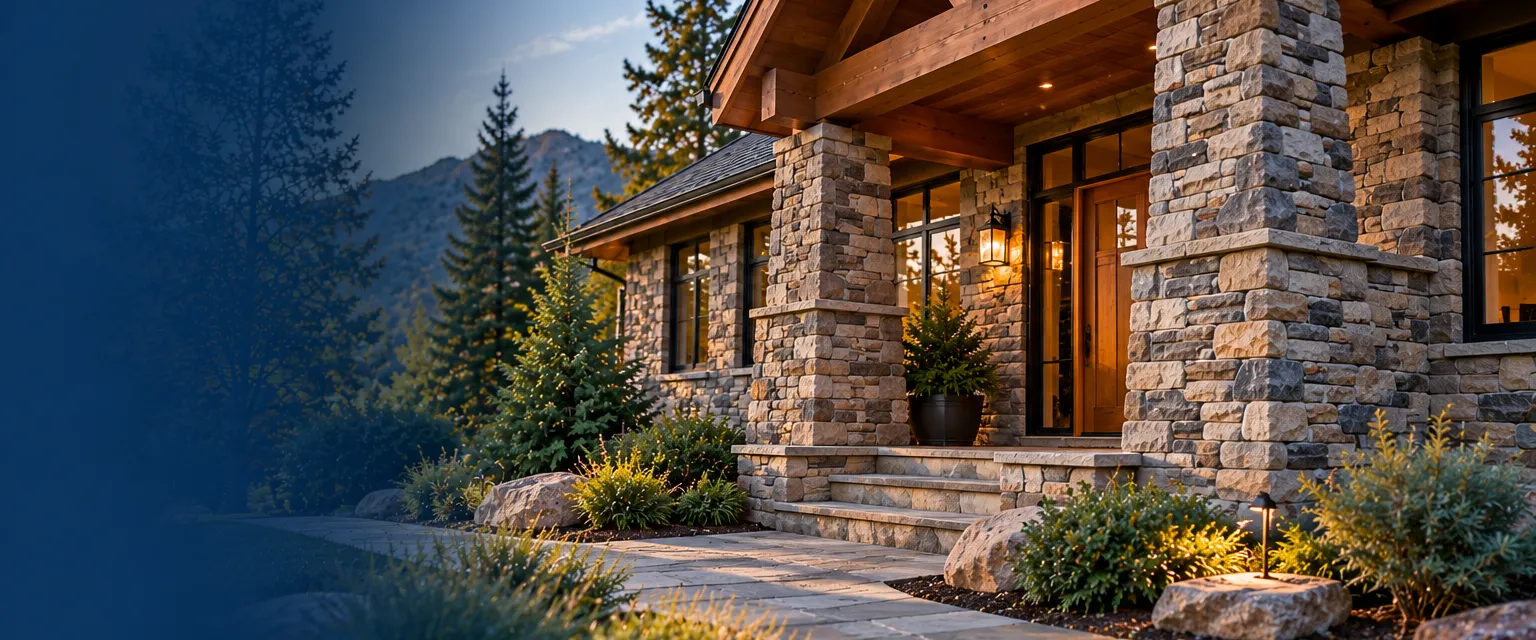
Stone veneer is thin natural stone or a cast concrete product made to look like it, adhered to a wall with mortar rather than stacked on a footing. The installer applies a weather barrier and a drainage mat, metal lath and a scratch coat, then sets each stone in mortar, fitting them tightly for a dry-stack look or leaving joints to grout. Flashing at the base and over openings, a weep screed, and a gap above grade and roofing keep water moving out. Columns, wainscots, fireplace surrounds and whole entries are common. Careful work shows in a natural mix of sizes and colors and in stones that stay put because the mortar bonded to a clean back.
When to call
- An entry, porch column, chimney or lower wall you want to finish in stone.
- A fireplace surround or exterior accent as part of a larger exterior project.
- Manufactured stone that has come loose, cracked or stained from water behind it.
What to expect
- SelectNatural or manufactured stone, color blend, joint style and the areas to cover are chosen.
- PrepareWeather barrier, drainage mat, flashing, lath and a scratch coat go on the wall.
- SetStones are laid out dry, back-buttered and set in mortar from the corners in, with joints grouted or left tight.
- FinishJoints are tooled, the face cleaned, sealer applied where the stone calls for it, and you review the work.
Get a certified company
Look up a certified company by ZIP code. Every company's license, insurance and trades are verified before it is listed, and placement is never paid.
Questions people ask
Natural or manufactured stone?
Natural stone is heavier, varies more and weathers well in any climate. Manufactured stone is lighter, quicker to set and consistent in color, but it is concrete and can fade or hold water if not detailed to drain.
Why does stone veneer fail?
Most failures come from water trapped behind it: no drainage plane, no weeps, stone run below grade or tight against a roof. The installation details matter more than the stone.
Can it go on a fireplace indoors?
Yes. Interior work skips the weather barrier and weeps but still needs lath, a scratch coat and the clearance from the firebox that the fireplace maker specifies.
Related: Brick veneer · Stucco installation and repair · Brick repair · All siding, windows and doors
This page describes what the service involves. The company you hire sets the scope, the schedule and the price, and your contract is with that company. We verify credentials and collect reviews from real jobs. We do not guarantee any company's workmanship. Safety steps are general guidance. When in doubt, leave the home and call 911.