
What this covers
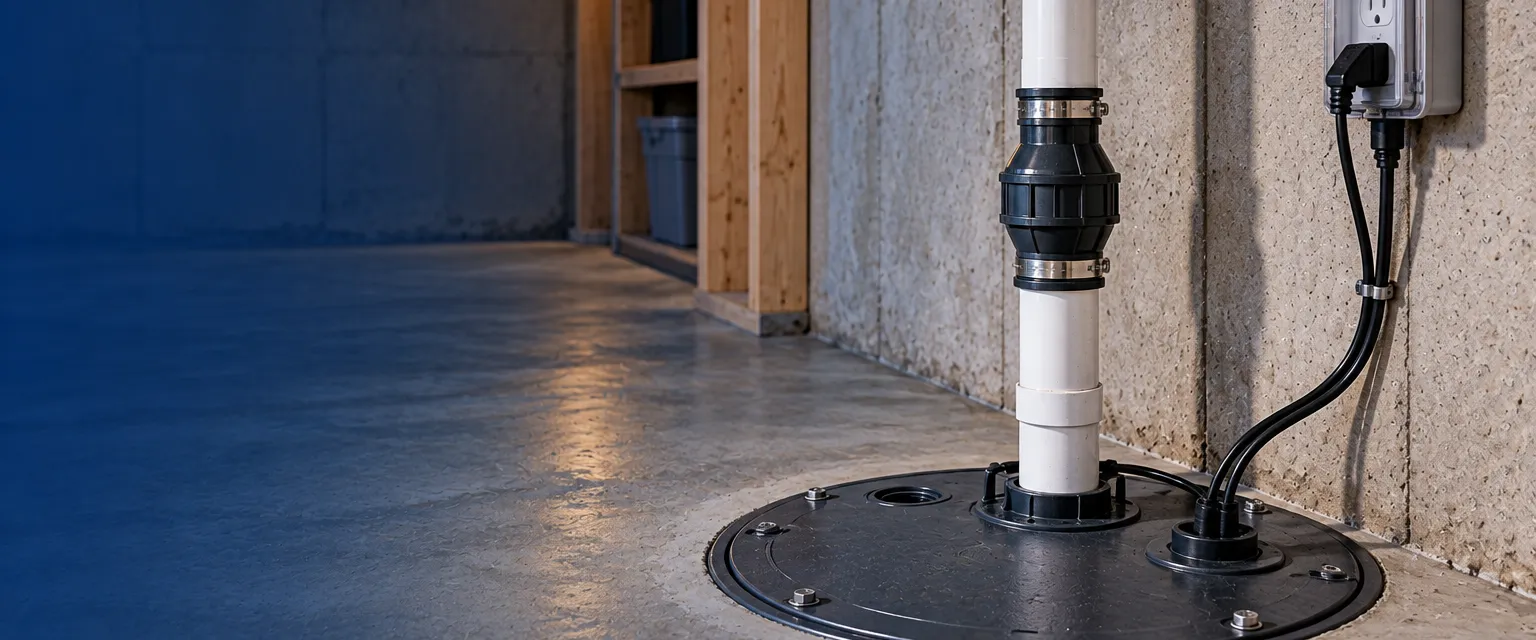
A sump pump collects groundwater from a basin set in the lowest point of a basement or crawlspace floor and pumps it outside before it rises to the slab. The company cuts the floor, sets a perforated basin in gravel, connects the perimeter drain if there is one, and installs a pump sized to the inflow with a check valve and a rigid discharge line that ends well away from the foundation. A sealed lid keeps out debris and humidity. Careful work includes a float switch that clears the basin wall, a dedicated outlet, and a battery or water-powered backup so the pump keeps running when a storm takes out the power.
When to call
- A basement or crawlspace that takes on water during heavy rain or snowmelt.
- An existing pump that runs constantly, cycles rapidly or is more than ten years old.
- A new interior drain system that needs a discharge point.
- A home that lost power during a storm and flooded when the pump stopped.
What to expect
- LocateThe lowest point and the discharge route are chosen, and the floor is marked.
- Set the basinThe floor is cut, the basin set in gravel and connected to any drain tile.
- InstallPump, check valve and discharge line are fitted and run outside, and the lid is sealed.
- TestThe basin is filled, the pump cycled, and the backup tested in front of you.
Get a certified company
Look up a certified company by ZIP code. Every company's license, insurance and trades are verified before it is listed, and placement is never paid.
Questions people ask
Pedestal or submersible pump?
Submersible pumps sit inside the basin under a sealed lid and run quieter. Pedestal pumps have the motor above the basin and are easier to service. Most new installations are submersible.
Do I need a backup pump?
A backup matters where the storms that bring water also bring power outages. Battery backups run for hours; water-powered backups use municipal water pressure and need no electricity.
Where should the discharge go?
Well away from the foundation, onto grade that slopes away or into a dry well or storm drain where the local code allows. It should never connect to the sanitary sewer.
Related: Basement waterproofing · Crawlspace encapsulation · Flood cleanup · All foundation, basement and drainage
This page describes what the service involves. The company you hire sets the scope, the schedule and the price, and your contract is with that company. We verify credentials and collect reviews from real jobs. We do not guarantee any company's workmanship. Safety steps are general guidance. When in doubt, leave the home and call 911.