
What this covers
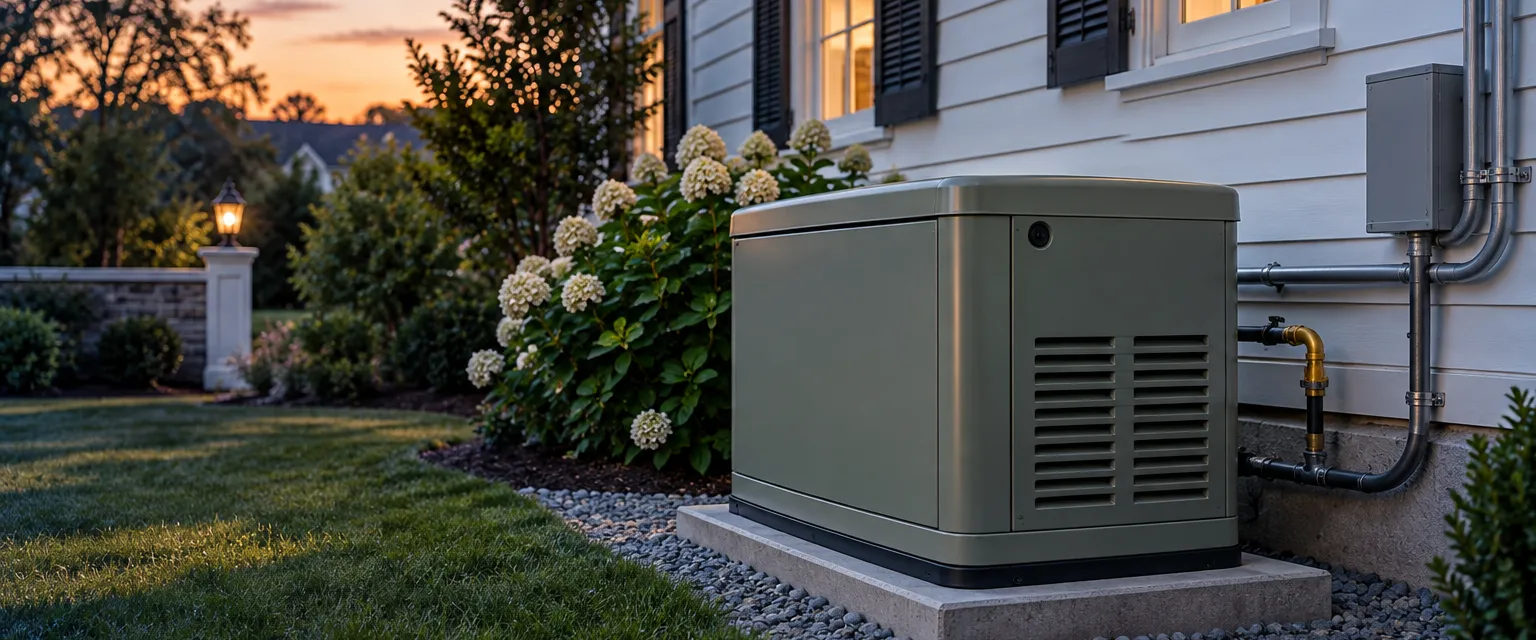
A standby generator sits outside on a pad, runs on natural gas or propane, and starts automatically when utility power fails. The company sizes it to the loads you want carried, from essential circuits such as the refrigerator, furnace, sump pump and a few rooms up to the whole house. The electrician installs an automatic transfer switch at the panel, runs the feeder and control wiring, and a licensed gas fitter connects the fuel. The unit is set on a pad with the clearances the manufacturer and the code require, then started, load-tested and programmed for its weekly self-test. Permits and inspection are part of the job.
When to call
- Outages that are frequent, or long enough to spoil food and chill the house.
- A sump pump, well pump, medical equipment or home office that cannot be without power.
- Pipes that could freeze if the heat is out for a day.
- A portable generator that has become a chore to run.
What to expect
- SizeThe electrician lists the circuits to be covered and sizes the generator and transfer switch to them.
- Site and permitsThe pad location is set for clearances, noise and fuel access, and the permits are pulled.
- InstallThe pad, generator, transfer switch, feeder and gas line are installed by the licensed trades.
- Start-upThe unit is commissioned under load, the self-test scheduled, and you are shown how it reports.
Get a certified company
Look up a certified company by ZIP code. Every company's license, insurance and trades are verified before it is listed, and placement is never paid.
Questions people ask
Whole house or essential circuits?
An essential-circuits generator is smaller and covers what matters most. A whole-house unit, often with load management, carries everything. The list of what you want running during an outage decides.
Natural gas or propane?
Natural gas where there is a utility line, since it never runs out. Propane needs a tank sized for the outages you expect. The generator is configured for one or the other.
How does it know to start?
The transfer switch senses the loss of utility power, starts the generator, and moves the house onto it in seconds. When power returns, it switches back and shuts the generator down.
Related: Electrical panel upgrades · Whole-home surge protection · Flood cleanup · All electrical
This page describes what the service involves. The company you hire sets the scope, the schedule and the price, and your contract is with that company. We verify credentials and collect reviews from real jobs. We do not guarantee any company's workmanship. Safety steps are general guidance. When in doubt, leave the home and call 911.